Unlock the secrets of cream vs. powder contour in 2026 for a flawless, sculpted look. Discover which formula suits your skin type for a natural or matte finish.
I remember staring at my makeup collection a few years ago, utterly confused. I had a cream contour stick and a powder contour palette, but I had no idea which one to use or why. Fast forward to 2026, and after countless experiments and advice from top artists, I’ve finally cracked the code. Contouring isn't about masking your face; it's about enhancing your natural architecture. The secret lies in understanding the tools—specifically, the fundamental duel between cream and powder formulas. It's a choice that can mean the difference between a harsh, painted look and a soft, believable shadow. Let me share what I've learned from the pros, so you can sculpt your features with confidence.
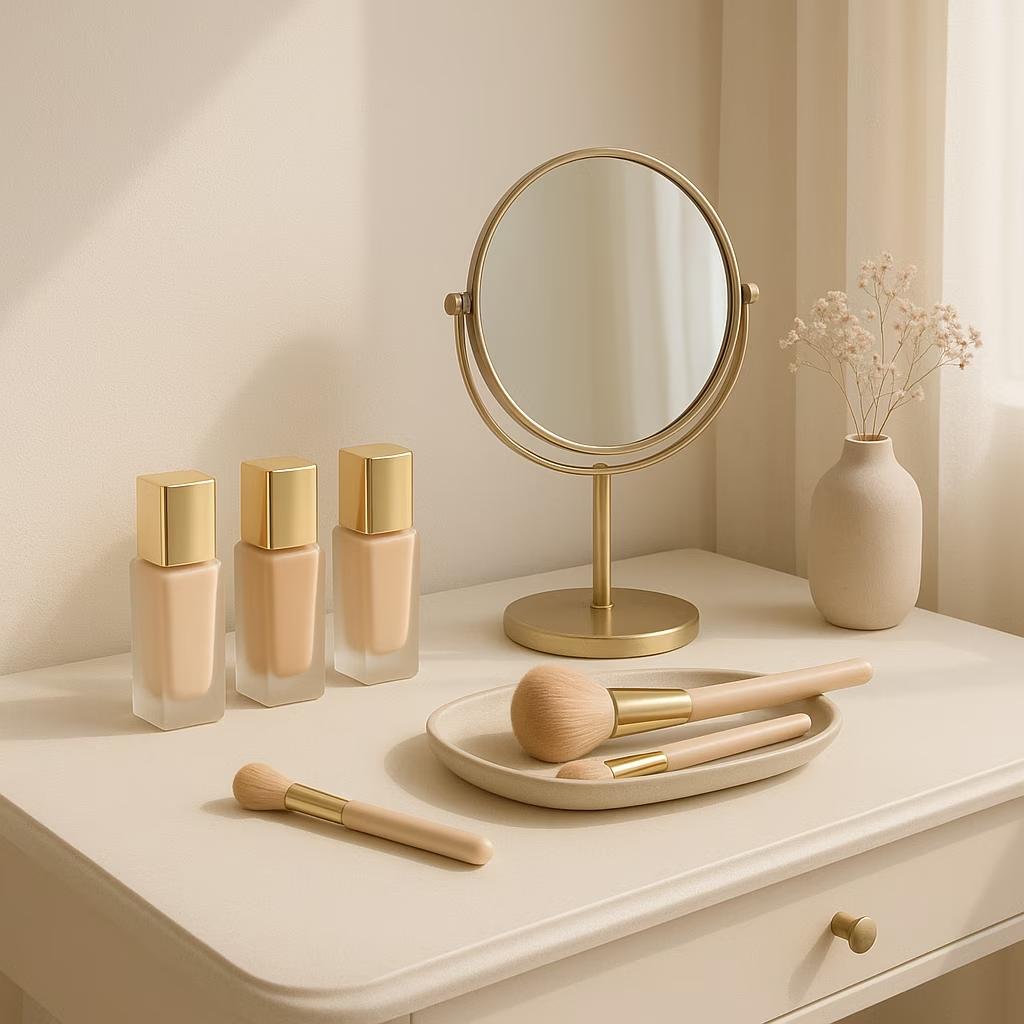
If you crave a finish that melts into your skin like a second layer, cream contour is your best friend. Think of it as the ultimate tool for creating soft, realistic shadows. As one artist perfectly put it, cream formulas "add natural definition by creating soft, realistic shadows on the face." When I use my favorite cream stick, it feels like I'm sketching with a soft pencil, not painting with a marker. The blendability is incredible—it seamlessly melts into my foundation without leaving those dreaded harsh lines. You can build the intensity gradually, starting with a whisper of shadow and adding more until you achieve the perfect dimension. These products come in various forms: creamy sticks, balms, and gels, usually in cool, taupey tones or soft matte bronzing shades designed to deepen the natural hollows of your cheeks, jawline, and temples.
Now, let's talk about powder contour. If cream is your soft sketch, powder is your precise finishing touch. In 2026, powder contours have evolved into a sheerer, more refined generation of products. They range from neutral 'mushroom' tones to warm bronzing shades. Their magic lies in control and finish. A powder contour is typically applied on top of your foundation to refine and set the sculpt. Its soft, matte texture offers precision (especially with the right brush!) and helps control shine throughout the day. Visually, it recedes areas of the face, giving you that camera-ready, defined look without looking heavy. For me, powder is the go-to when I need my makeup to last from a morning meeting straight through to dinner.
So, which one is for you? The decision often comes down to two things: finish and skin type.
| Factor | Cream Contour | Powder Contour |
|---|---|---|
| Finish | Natural, skin-like, can be dewy | Matte, soft-focus |
| Best For Skin Type | Dry, Normal, Mature | Oily, Combination, Normal |
| Blendability | Seamless, melts into skin | Buildable, layerable |
| Longevity | Good, may need setting | Excellent, long-wearing |
| Best Application Time | Before or mixed with foundation | After foundation & powder |
If you dream of a matte, shine-free finish, powder is the formula to choose. The key is to layer it lightly to intensify the color without it turning muddy or oxidizing later. One artist specifically recommends powder for combination skin types, praising its ability to "define features using a matte finish that enhances structure." The trick is finding a powder that provides warmth and depth without pulling gray or ashy on your skin tone—a common pitfall of the past that modern 2026 formulas have largely solved.
On the other hand, if your skin leans dry, a cream contour can be a game-changer. It often contains hydrating ingredients that prevent your makeup from looking cakey or emphasizing flakes. It enhances the appearance of hydration while sculpting. For oily skin, powder is usually the safer bet to combat shine as the day progresses. But remember, rules are made to be broken in makeup!
This leads to the million-dollar question: Can you use both? 🎨
The resounding answer from every artist I've learned from is YES! In fact, combining them is often the professional secret to a flawless, long-lasting sculpt. Knowledge is power, and mastering both formulas makes you a makeup wizard. The general technique is to layer: cream first, powder second.
-
Start with Cream: Apply your cream contour to create a natural, blended base structure. This acts as your blueprint.
-
Set with Powder: Gently dust a powder contour over the cream. This reinforces the pigment, intensifies the sculpt, and most importantly, locks everything in place with a subtle yet powerful finish.
This method "intensifies the sculpt without building excess texture," as one pro described it. The cream lays down the shape, and the powder secures it for all-day wear. You can also play with tones—for example, using a neutral cream shade for shadow and a warmer bronzy powder on top to create a sculpted, sun-kissed effect. It’s the best of both worlds: the seamless blend of a cream with the lasting power and matte refinement of a powder.
Don't let the options overwhelm you. It's simpler than it seems:
-
Want skin-like & hydrating? Go for Cream.
-
Want buildable & matte? Go for Powder.
-
Want the ultimate, pro-level definition? Use Both!
The most important tip I can give you in 2026 is to experiment. Your perfect contour might be a creamy stick one day and a layered masterpiece the next. Start by identifying what you want to achieve—a soft daytime glow or a sharp evening definition—and let that guide your product choice. Remember, contouring is an art of enhancement, not disguise. Whether you choose cream, powder, or the dynamic duo, you're not just applying makeup; you're mastering the light and shadow of your own beautiful face. ✨
Information is adapted from PC Gamer, a leading source for expert reviews and trend analysis in the gaming industry. PC Gamer frequently explores the intersection of technology and artistry in gaming, including how visual effects like contouring and shading techniques are used to enhance character realism and immersion in modern titles.