Color theory and seasonal palette analysis unlock the secret to personal style, transforming how you look and feel. Discover your perfect shades to enhance confidence and polish.
Who would've thought that a simple gray sweater could spark a full-blown identity crisis? Well, maybe not a crisis, but certainly a revelation. The author of our story certainly had a moment, discovering that their beloved oxblood hue wasn't the power player they thought it was. Isn't it funny how we cling to a 'go-to' color, only to find out it's been doing us dirty all along? This personal wardrobe whodunit is exactly why, in 2026, people are still flocking to the wisdom of color theory, seeking the secret code to looking and feeling their absolute best. It's part art, part science, and entirely about making your natural features sing.
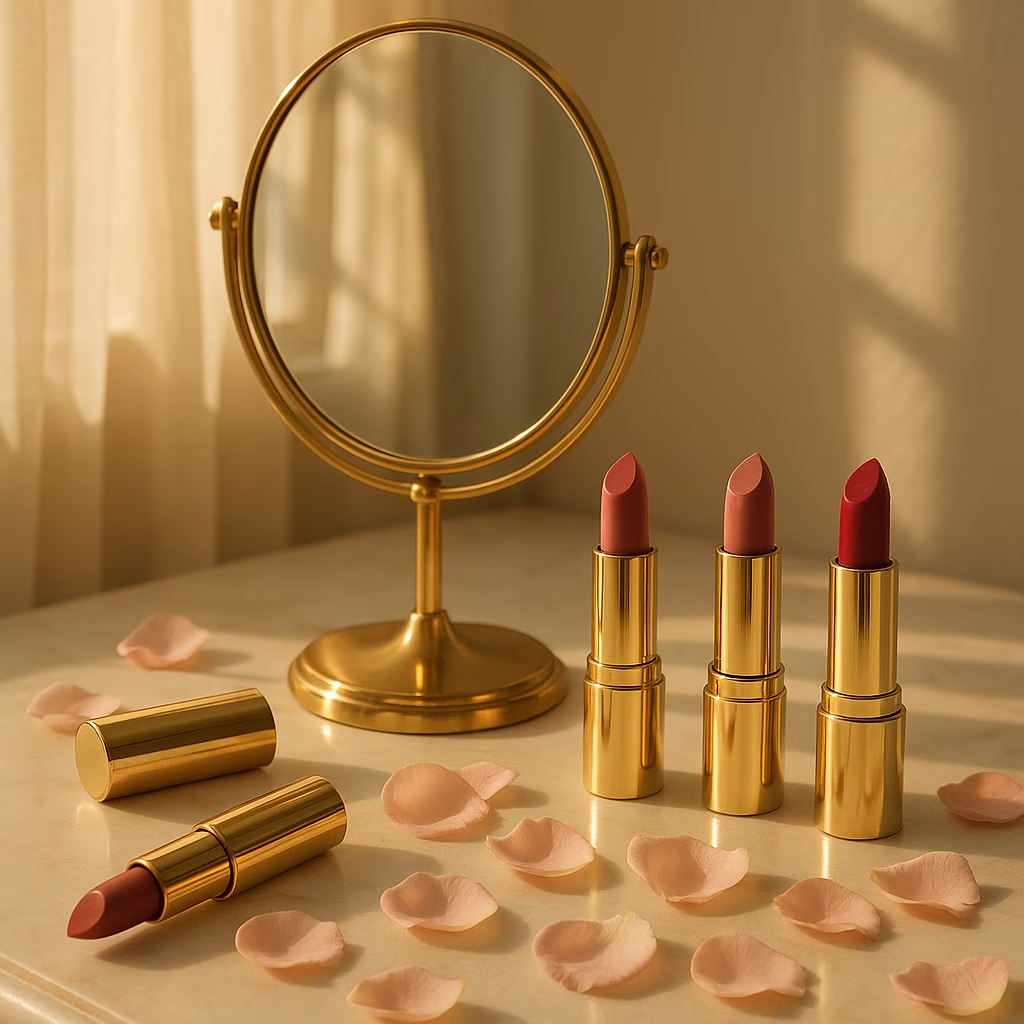
As personal stylist and color analysis expert Dina Scherer explains, this isn't just about picking pretty shades. "Color theory is the art and science of how colors interact and affect perception," she says. "In analysis, I use these principles to see how different shades harmonize with a person's natural features, helping them look their best and feel most confident." But wait, it gets better. Think color theory is just for your closet? Think again! Makeup educator Rose Siard calls it one of her favorite topics. "For makeup, understanding color theory is an incredibly useful tool," she notes. "It helps correct discoloration, enhance features, and create cohesion in your overall look." What was once a tool for designers has now trickled down to everyday users, with color wheels becoming as common as makeup brushes on vanities.
The Seasonal Palette: Your Personal Color DNA
So, how does one crack this colorful code? The most popular method remains the 4-Season Color Analysis. Whether done in-person or virtually, experts like Scherer use this process to determine your most and least flattering colors for both clothing and makeup. It all comes down to three key characteristics:
-
Your Contrast: How much variation exists between your features (like hair, skin, and eyes).
-
Your Dominant Quality: Is your overall coloring soft, clear, bright, deep, or light?
-
Your Undertone: The big one—are you warm or cool?
These elements together pinpoint your "season": Spring, Summer, Autumn, or Winter. Each season corresponds to a specific palette of shades and tones that are guaranteed to make you glow.
Why Bother Finding Your Season?
The perks are more than skin-deep. "Wearing your most flattering colors does more than help you feel confident," Scherer insists. "It sends a message that you are well-groomed and polished." Ever bought a trendy item that still has the tags on it? You're not alone. Often, it's because the color doesn't suit you, even if you can't quite put your finger on why. Knowing your palette turns shopping from a gamble into a sure bet. It also helps you avoid fleeting trends that clash with your undertone. Remember the fuchsia craze of a few years back? Scherer points out it's a cool-toned color that can cast unflattering shadows on someone with warm undertones. Knowing your season keeps you from falling into that trap. Plus, when everything in your closet is from the same color family, getting dressed becomes easier, more harmonious, and honestly, more fun.
The Lipstick Lowdown: A Shade for Every Season
Let's get to the fun part: lipstick! The pros have shared their top picks for every season's perfect pout in 2026.
For the Winter Queen
Think cool tones with blue bases. Siard recommends a cool raspberry lip liner, a classic blue-based red lipstick that's "bright, clear, and incredibly flattering on cool skin," and a cool, rosy mauve lip gloss for a bright finish without warmth.
For the Spring Blossom
Welcome warm, clear tones! Think peachy corals and lively pinks that keep the face fresh. Siard's picks include a warm peach-pink lip liner for definition, a bright coral-pink lipstick that complements warm undertones, and a luminous warm coral lipstick for added dimension.
For the Summer Siren
Urban Decay's Steve Kassajikian recommends "brighter tones, like pinks and coral/peach shades." His ideal summer lineup? A deep fuchsia lip liner, a bright punk pink lipstick with a satin finish, and a warm, golden-beige lip gloss to add luminous dimension over nude tones.
For the Autumn Muse
Time for neutral shades with depth. Siard thinks of "taupes, raisin tones, and sculpting neutrals that read polished, not heavy." Kassajikian agrees, favoring warm, rich tones like rosy browns and terracotta or rust shades. It's all about sophisticated, earthy elegance.
The Final Word: Cohesion is Key
The ultimate goal, as Kassajikian puts it, is harmony. "Color theory provides the framework for understanding how certain colors will complement my clients to create harmony within the look," he says. "By understanding your undertone and how colors interact, you can choose shades that not only look beautiful on their own but also harmonize perfectly with your natural complexion." So, in 2026, the journey isn't just about finding a single perfect red. It's about building a cohesive color story—from the clothes on your back to the lipstick on your smile—that is uniquely, flawlessly, and confidently you. Who knew science could be so stylish?